
In today’s high-stakes commercial landscape, operational oversight is no longer a luxury—it is a fundamental requirement for survival and growth. For UK businesses managing high-value assets, from heavy construction plant and articulated trailers to sensitive, high-value cargo in transit, the margin for error is razor-thin. Theft, unauthorised use, and logistical blind spots represent significant financial and reputational risks. The challenge lies in implementing a monitoring system that is robust, reliable, and seamlessly integrated into existing workflows without causing disruptive downtime.
This is where the strategic implementation of integrated GPS tracking solutions becomes paramount. Moving far beyond the limitations of consumer-grade trackers, these professional systems offer a powerful synergy of pre-configured hardware, intelligent software, and industrial-grade connectivity. They provide not just a location on a map, but a comprehensive, real-time data stream that empowers businesses to protect their assets, optimise their operations, and make informed, data-driven decisions. This guide explores the architecture, application, and strategic value of integrated GPS solutions, demonstrating how they provide a decisive advantage in modern asset management.
Defining Integrated GPS Tracking Solutions for Modern Industry
An integrated GPS tracking solution is a comprehensive ecosystem, not merely a piece of hardware. It represents the fusion of three core elements: ruggedised, pre-configured tracking devices; secure, resilient connectivity; and a sophisticated cloud-based platform for data analysis and management. This combination transforms simple location pings into a rich source of telematics data, providing deep insights into asset status, usage patterns, and environmental conditions.
For UK industries, the shift towards these “plug-and-play” industrial IoT (Internet of Things) systems is driven by a need for immediate, reliable oversight. Unlike standard trackers that require complex setup and often fail in harsh environments, professional integrated systems are engineered for specific use cases. Whether it’s a covert device hidden within a pallet of high-value electronics or a ruggedised unit bolted to a piece of heavy machinery, the hardware is designed to work flawlessly out of the box, delivering data integrity from day one.
- A Holistic System: Understand how integrated solutions combine purpose-built hardware, specialised firmware, and powerful cloud platforms into a single, cohesive system.
- Beyond Location Pings: Explore the transition from basic location tracking to rich telematics, capturing data on engine hours, unauthorised movement, and sensor triggers.
- The Rise of Industrial IoT: Recognise why UK logistics, construction, and freight businesses are increasingly adopting ready-to-deploy IoT solutions to eliminate operational blind spots.
- Professional vs. Consumer Grade: Distinguish between easily disabled consumer trackers and professional integrated systems designed for covert installation, evidential monitoring, and high-security applications.
The Core Components of an Integrated System
True integration is built on a foundation of components that are designed to work together seamlessly. This synergy is what provides the reliability and depth of data that modern asset management demands.
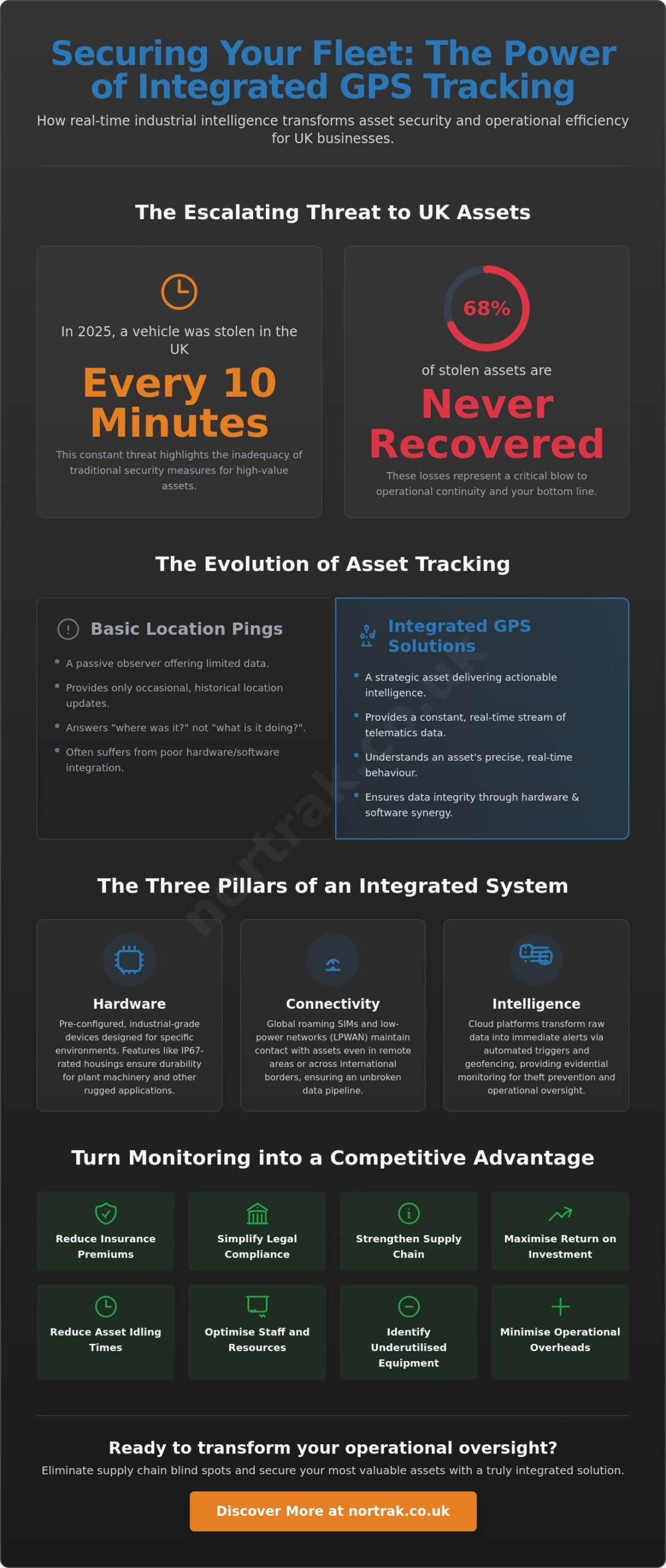
- Hardware: Devices are pre-configured and purpose-built for specific industrial environments. This includes ruggedised, waterproof casings for plant machinery, long-life batteries for non-powered assets like trailers, and compact, covert designs for securing high-value cargo.
- Connectivity: Global roaming SIMs and low-power wide-area networks (LPWAN) ensure that assets remain visible, whether they are in a remote UK quarry or crossing international borders as part of a global supply chain.
- Intelligence: The system’s intelligence lies in its software platform. This is where automated triggers, customisable geofencing, and evidential monitoring reports are managed, turning raw data into actionable business intelligence.
The Strategic Value of Real-Time Data
The ultimate goal of an integrated GPS solution is to provide strategic value through actionable data. Real-time visibility is the cornerstone of modern logistics and asset security, enabling businesses to operate with greater agility and control.
- Reduce Operational Friction: Instantly locate any asset to streamline logistics, improve client communication, and ensure project timelines are met.
- Optimise Asset Utilisation: Use historical data on movement and usage to identify underutilised assets, optimise deployment schedules, and improve route planning.
- Strengthen Supply Chain Resilience: Proactively identify and respond to disruptions, from cargo theft to unauthorised stops, thereby protecting assets and reducing financial overheads.
The Architecture of Connectivity: Hardware, Software, and IoT
The effectiveness of any tracking solution hinges on the synergy between its hardware and software. While many providers focus on software that is compatible with hundreds of generic devices, this approach often sacrifices functionality and reliability. An integrated system, by contrast, is built on a foundation of hardware and software developed in unison, ensuring every feature works as intended and data integrity is never compromised.
This deep integration is the engine of industrial IoT applications, enabling powerful geographical automations that drive efficiency and security. Pre-configured devices eliminate the risk of human error during setup, a common failure point in systems that rely on generic hardware. Furthermore, data transmission and cloud storage are secured with end-to-end encryption, protecting sensitive operational data from unauthorised access.
- Hardware-Software Synergy: Analysing why the integrity and richness of telematics data depend on a seamless connection between the device and the platform.
- Geographical Automations: How industrial IoT leverages location data to trigger automated alerts, reports, and actions within other business systems.
- The Pre-Configured Advantage: Understanding how devices that are ready to deploy out of the box minimise configuration errors and accelerate time-to-value.
- Data Security Protocols: A look at the importance of end-to-end encryption and secure cloud infrastructure in protecting sensitive asset location and usage data.
Pre-Configured Hardware vs. Generic Trackers
For time-poor operations managers and logistics directors, the choice between a pre-configured system and a generic, self-install tracker has significant implications. The “out-of-the-box” readiness of an integrated solution is critical for rapid, scalable deployment across a diverse portfolio of assets.
- Critical Speed of Deployment: Professionally configured hardware can be installed and activated in minutes, not hours, allowing an entire fleet or inventory of assets to be brought online without significant downtime.
- Consistency Across Diverse Assets: An integrated approach ensures that every asset, from a powered vehicle to an unpowered container, reports to the same platform with a consistent data structure and feature set.
- Reduced Technical Debt: Relying on professionally developed and maintained firmware avoids the long-term costs and security vulnerabilities associated with managing a fragmented collection of generic devices.
Industrial IoT and Automated Triggers
The true power of an integrated solution is unlocked when it moves beyond passive monitoring to proactive, automated management. This is the domain of the Industrial IoT, where tracking data is used to trigger real-world alerts and actions.
- Intelligent Geofencing: Define virtual boundaries around depots, client sites, or transport corridors. The system can automatically generate alerts when an asset enters or leaves a designated area, crucial for confirming deliveries or detecting theft.
- Automated Security Alerts: Receive instant notifications via SMS or email for events like unauthorised movement outside of working hours, tampering with the device, or a trailer being decoupled in an unsecured location.
- ERP and System Integration: Feed tracking data directly into existing Enterprise Resource Planning (ERP) or management systems to automate billing based on usage hours or to streamline logistics workflows.
Beyond Basic Location: Securing High-Value Plant, Trailers, and Cargo
Modern asset management extends far beyond tracking a fleet of vans. The most significant risks—and the greatest need for robust security—often involve non-powered, high-value assets. This includes heavy construction equipment susceptible to “plant-napping,” articulated trailers left in unsecured yards, and discrete shipments of high-value goods like pharmaceuticals, electronics, or spirits vulnerable to interception.
Specialised integrated solutions are engineered to meet these unique challenges. Products like TrailerSentry® provide dedicated, long-battery-life monitoring for logistics assets that are frequently decoupled from a power source. For complex machinery, solutions like Sign-bot can monitor not just location but the status of moving parts. Critically, for high-value cargo, covert trackers can be concealed within pallets or individual packages, providing an invisible layer of security. This focus on evidential monitoring provides law enforcement with the actionable intelligence needed to recover stolen assets and helps businesses build robust cases for insurance claims.
- Monitoring Non-Powered Assets: Addressing the unique power and connectivity challenges of tracking assets like trailers and containers.
- Dedicated Logistics Security: How TrailerSentry® offers a purpose-built solution for ensuring the security and visibility of the UK’s trailer fleet.
- Evidential Intelligence: Building a verifiable, time-stamped record of an asset’s movement and status to support recovery efforts and satisfy insurance requirements.
*Covert Cargo Tracking: The critical role of small, concealable trackers in protecting high-value goods from organised crime and supply chain theft.
Securing Heavy Plant and Construction Equipment
Construction sites are prime targets for organised theft, with the loss of a single piece of equipment capable of causing crippling project delays and financial damage. Integrated GPS solutions provide a powerful defence.
- Ruggedised Hardware: Devices are housed in IP-rated, vibration-resistant enclosures designed to withstand the harsh conditions of a construction site.
- Usage and Maintenance Monitoring: Track engine hours alongside location to automate maintenance schedules and verify billing, ensuring optimal asset health and profitability.
- Preventing “Plant-Napping”: Utilise a combination of overt and covert trackers to deter theft and provide a reliable method for recovery if an asset is stolen. Geofencing and after-hours movement alerts provide an immediate first line of defence.
Specialised Solutions for Logistics and Freight
For logistics operators, visibility is paramount. The journey of goods from warehouse to final destination is fraught with potential disruption, making specialised tracking solutions essential.
- Independent Trailer Tracking: With TrailerSentry®, a trailer remains visible and secure even when it is decoupled from the tractor unit, eliminating a major security blind spot in logistics parks and depots.
- Complex Telematics with Sign-bot: For assets with their own operational parts, such as mobile signage or pumps, Sign-bot facilitates telematics that monitor both location and function, ensuring the equipment is working as intended.
*Global Cargo and Freight Monitoring: Deploy covert trackers with global connectivity to monitor high-value consignments as they move through complex international supply chains, providing peace of mind and proof of delivery.
Deployment Strategies: Minimising Downtime and Maximising ROI
The perceived disruption of implementing a new technology is a common barrier to adoption. However, with an integrated GPS tracking solution built around pre-configured hardware, a national rollout can be executed swiftly and efficiently without disrupting daily schedules. The key is a structured approach that prioritises ease of installation and immediate operational value.
The return on investment (ROI) is quantified not only through enhanced efficiency but, more critically, through theft prevention and rapid asset recovery. The cost of a single stolen asset—be it a £50,000 excavator or a £200,000 shipment of electronics—far exceeds the investment in a professional tracking system. Effective deployment also involves training staff to leverage the telematics data, turning insights into a proactive culture of security and operational excellence.
- Quantifying ROI Through Prevention: Calculate the return on investment based on the value of assets protected and the high probability of recovery.
- Eliminating Operational Bottlenecks: See how easy-install, pre-configured hardware allows for rapid deployment by internal staff or a professional network, avoiding project delays.
- Organising a Scalable Rollout: Plan a phased implementation across a national fleet or asset inventory without interrupting core business activities.
- Empowering Your Team: Ensure staff are trained to use the platform, respond to alerts, and utilise data for daily operational improvements.
The 5-Step Deployment Framework
A successful implementation follows a clear, logical progression designed to maximise impact and minimise friction. This strategic framework ensures the solution is tailored to the specific risks and operational needs of the business.
- Asset Audit: Begin by identifying the highest-risk and highest-value assets within your operation. This includes equipment frequently left on-site, trailers in third-party yards, and high-value cargo routes.
- Hardware Selection: Match the right device to the right asset. This could mean selecting TrailerSentry® for your logistics fleet, ruggedised units for plant, or discreet covert trackers for sensitive cargo.
- Rapid Installation: Utilise the pre-configured nature of the devices for immediate uptime. The “plug-and-play” design ensures that assets are online and reporting within minutes of installation.
- System Integration: Link the hardware to the central monitoring platform, configuring user access levels, alert recipients, and custom geofences.
- Training and Handover: Conduct focused training sessions with key personnel to ensure they are confident in using the system to monitor assets, run reports, and respond to security triggers.
Calculating the True Cost of Asset Loss
The financial impact of asset theft extends far beyond the replacement cost of the item itself. A comprehensive ROI calculation must account for the full spectrum of associated damages.
- Direct vs. Indirect Costs: Factor in not just the capital cost of the lost asset, but also the costs of project delays, equipment hire, and lost revenue.
- Insurance Premium Impact: The presence of a professional, insurance-approved tracking system can significantly reduce annual premiums and lower the excess on a policy. Conversely, a loss can lead to crippling premium increases.
- Long-Term Savings: Beyond security, leverage tracking data to improve asset utilisation, reduce fuel consumption through route optimisation, and automate maintenance, delivering ongoing savings.
Bespoke Integration and OEM Development for Scalable Operations
While off-the-shelf solutions like TrailerSentry® cater to a wide range of industrial needs, some businesses require a tracking solution that is fully integrated into their own products or unique operational hardware. This is where Original Equipment Manufacturer (OEM) development provides a powerful, scalable path forward. The case for bespoke development arises when a business needs to create a custom connected product, either for internal use or to offer to its own customers.
Nortrak facilitates this entire journey, from initial concept to a fully realised connected asset. This collaborative process allows for the creation of unique IoT architectures that are perfectly aligned with specific business logic. Whether it’s embedding tracking technology into manufactured goods, designing a sensor for a niche industrial application, or creating a proprietary monitoring system for a specialised fleet, OEM development future-proofs an operation with a truly custom, scalable solution.
- The Case for OEM Development: Understanding when a bespoke solution is necessary to meet unique sensor requirements or integration challenges that off-the-shelf products cannot address.
- Creating Custom Connected Products: Explore the potential of building tracking and telematics capabilities directly into your own industrial products and assets.
- From Concept to Connected Asset: How Nortrak’s expertise in industrial IoT can guide a business through the prototyping, development, and deployment of a bespoke solution.
- Future-Proofing with Bespoke IoT: Building a scalable, proprietary IoT architecture that grows with your business and provides a unique competitive advantage.
The OEM Development Lifecycle
Creating a custom integrated solution is a structured, collaborative process that moves from a business need to a market-ready product.
- Defining Requirements: The process begins with a deep dive into the specific operational challenge, defining the exact sensor data, alert triggers, and hardware form factor required.
- Prototyping Ruggedised Hardware: Develop and test prototype hardware designed to perform reliably in the target niche environment, ensuring it meets all durability and performance benchmarks.
- Developing Custom Firmware: Write and deploy firmware that aligns with proprietary business logic, ensuring the device behaves exactly as needed to capture the right data at the right time.
Integrating Tracking into Your Product Ecosystem
OEM development offers a strategic opportunity to add significant value to your existing products and services, creating new revenue streams and enhancing customer loyalty.
- Add “Trackable” as a Feature: Enhance your own manufactured products by offering built-in tracking capabilities, providing your customers with a powerful security and management tool.
- Leverage Nortrak’s Expertise: Partner with a specialist in industrial IoT and telematics to accelerate your development timeline and ensure your connected product is built on a proven, reliable technology stack.
- Enquire about bespoke OEM development with Nortrak