
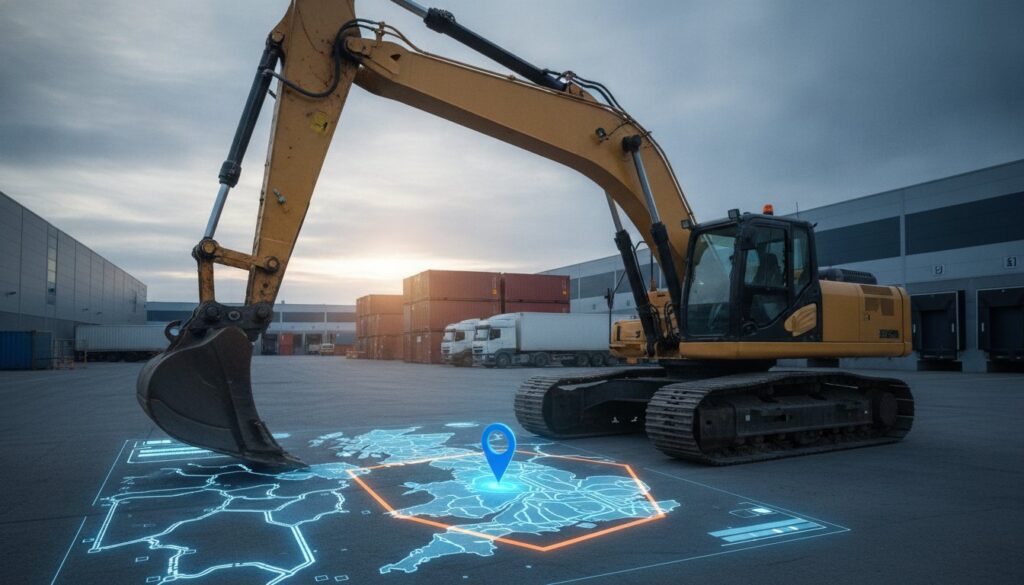
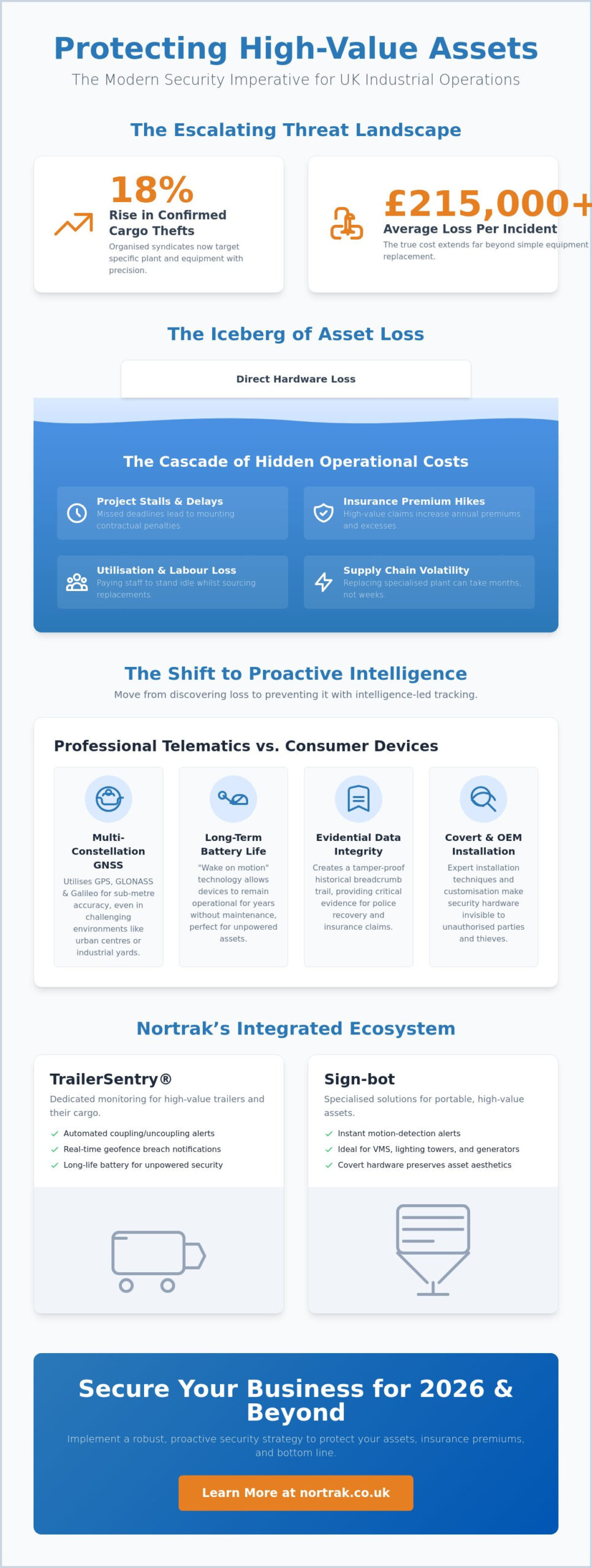
With confirmed cargo theft incidents rising by 18% in 2025 and the average loss per incident now exceeding £215,000, the financial risk to your operations is no longer a theoretical concern. You already recognise that escalating insurance premiums and the threat of sudden operational downtime are significant hurdles to maintaining a lean, profitable business. Implementing robust GPS tracking for high value assets is no longer just a security measure; it is a fundamental requirement for protecting your bottom line whilst equipment sits in remote UK locations.
This article demonstrates how professional-grade telematics and covert tracking strategies can transform your security posture from reactive to proactive. You will discover how long-term battery technology provides the visibility and evidential data required for successful police recovery and insurance claims. We will also outline the strategic shift towards automated geofencing and operational intelligence that ensures your business remains resilient throughout 2026.
Key Takeaways
- Analyse why standard security measures are insufficient against professional theft syndicates and how to mitigate these evolving risks.
- Discover the technical superiority of multi-constellation GNSS for high-precision GPS tracking for high value assets in remote environments.
- Calculate the operational ROI of prioritising rapid asset recovery over expensive equipment replacement through automated geofencing.
- Leverage covert installation techniques and OEM customisation to ensure your security hardware remains invisible to unauthorised parties.
- Secure your logistics chain using specialised solutions like TrailerSentry® and Sign-bot for dedicated monitoring of trailers and portable assets.
The Evolving Risk Landscape for High-Value Industrial Assets
Industrial theft in the United Kingdom has transitioned from opportunistic crime to highly organised operations. Professional syndicates now target specific plant and equipment with surgical precision, often bypassing traditional physical barriers within minutes. Relying solely on perimeter fencing or manual logs leaves your operations exposed. A GPS tracking unit provides the necessary digital layer to counter these threats, offering real-time oversight that physical security cannot match.
When a critical asset goes missing, the immediate loss of hardware is merely the tip of the iceberg. You face a cascade of operational failures. Projects stall. Deadlines are missed. Contractual penalties begin to mount. Transitioning to a model of proactive oversight through GPS tracking for high value assets allows you to detect unauthorised movement the moment it occurs, rather than discovering a vacant site on Monday morning. This shift from reactive recovery to strategic intelligence is what separates resilient businesses from those vulnerable to professional theft.
The Financial Impact of Asset Vulnerability
Calculating the true cost of asset loss requires looking beyond the initial purchase price. You must account for the “hidden” drains on your capital. Professional GPS tracking for high value assets mitigates these risks by providing the data needed to keep projects on track. Consider the following financial pressures:
- Asset Replacement Lead Times: In 2026, global supply chains still face volatility. Replacing a specialised piece of plant can take months, not weeks.
- Insurance Premium Escalation: Claims for high-value assets often lead to significant increases in annual premiums and higher compulsory excesses.
- Utilisation Loss: Missing equipment means paying staff to stand idle whilst you source a replacement.
Regulatory and Insurance Requirements in the UK
Insurers in the UK market are increasingly demanding more than just a basic alarm system. They want evidence of a robust resilience audit. Using high-spec telematics hardware demonstrates to your provider that you’ve taken reasonable steps to secure your fleet. Whilst specific requirements vary, many insurers favour hardware that provides evidential data suitable for police recovery efforts. This level of technical oversight doesn’t just protect the asset; it validates your entire business continuity plan. It’s about proving that your operations are under control, even when equipment is deployed to remote, unpowered locations across the country.
Beyond Simple GPS: Intelligence-Led Tracking Strategies
Professional tracking systems differ fundamentally from the consumer-grade devices found on the high street. Whilst a basic tracker might provide a rough location, it often fails when faced with the rigours of industrial environments or professional theft attempts. High-precision GPS tracking for high value assets utilises multi-constellation GNSS. This technology allows the hardware to communicate with multiple satellite systems simultaneously, such as GPS, GLONASS, and Galileo. The result is sub-metre accuracy that remains reliable even in challenging locations like dense urban centres or metal-heavy industrial yards.
Battery longevity is a critical factor for unpowered assets. Professional hardware employs “wake on motion” technology to solve this problem. The device remains in a deep-sleep state to conserve power, activating its transmitter only when internal sensors detect unauthorised movement. This allows a single unit to remain operational for years without maintenance. It ensures your security layer stays active whilst equipment is in long-term storage or remote transit. Integrating these units into a wider telematics framework for cargo and freight worldwide provides a unified view of your logistics, which is a cornerstone of modern Vehicle Theft Prevention strategies.
Evidential Monitoring and Data Integrity
In the event of a theft, the data your system provides must be more than just helpful; it must be admissible. Evidential monitoring refers to data that is tamper-proof and maintains a clear chain of custody. Professional GPS tracking for high value assets creates a historical breadcrumb trail that serves as critical evidence for police recovery and corporate liability assessments. It proves exactly where an asset was at any given second, leaving no room for dispute during insurance claims or legal proceedings. To ensure your data meets these high standards, it’s worth reviewing specialised GPS tracking solutions designed for industrial applications.
Signal Resilience and Anti-Jamming Technology
Professional thieves often use signal jammers to “blind” standard tracking units. Business owners are rightly concerned about this vulnerability. Professional-grade hardware counters this threat through signal resilience and anti-jamming protocols. If the primary GNSS signal is disrupted, the unit can automatically switch frequencies or fall back to Location Based Services (LBS). This fallback uses mobile tower triangulation to maintain visibility. You don’t lose sight of your asset just because a thief attempts to block the satellite connection. This multi-layered approach to connectivity ensures that your oversight remains unbroken, regardless of the tactics used by organised syndicates.
Quantifying the ROI: Theft Prevention vs. Asset Recovery
Investing in professional telematics isn’t a sunk cost; it’s a strategic protection of your capital. When you consider that the average value of a cargo theft incident rose significantly in 2025, the financial justification for GPS tracking for high value assets becomes clear. Replacing a £250,000 piece of specialised plant isn’t just about the invoice price. It’s about the lost man-hours, the project delays, and the inevitable rise in insurance premiums. Recovery is almost always more cost-effective than replacement, particularly when you consider the current volatility in global equipment supply chains.
The data is conclusive. Assets equipped with professional tracking hardware have a recovery rate of over 70%. In contrast, untracked assets see a recovery rate of less than 10%. This disparity represents a massive risk to your business continuity. By maintaining real-time visibility, you aren’t just watching your equipment; you’re ensuring that if a theft occurs, the window for recovery remains wide open. This proactive stance allows you to provide the police with live location data, which is often the deciding factor in a successful retrieval.
Geofencing and Automated Triggers
Digital perimeters, or geofences, allow you to create “Safe Zones” around your depots or active sites. If a piece of machinery leaves these boundaries outside of authorised hours, the system triggers an immediate alert. This automation removes the need for constant manual monitoring. You can integrate these triggers with your existing security protocols, ensuring that your team is notified the moment an asset is moved. It’s a simple, effective way to stop theft whilst it’s in progress, rather than discovering the loss hours or days later.
Utilisation and Maintenance Oversight
Beyond security, GPS tracking for high value assets provides deep insights into operational efficiency. Telematics data reveals how your equipment is actually being used. Are certain machines sitting idle whilst others are over-utilised? By analysing movement and engine hours, you can redistribute your fleet to maximise productivity. Furthermore, you can move away from guesswork by scheduling maintenance based on actual usage data. This prevents mechanical failures before they happen, reducing downtime and extending the lifespan of your most expensive hardware. It’s about making your assets work harder for you, whilst keeping them secure.
Strategic Deployment: Covert Installation and OEM Customisation
The effectiveness of GPS tracking for high value assets often depends on the sophistication of the installation. Professional thieves know exactly where to look for standard, factory-fitted trackers. They check OBD ports and obvious battery connections first. Covert deployment involves hiding devices deep within the chassis or internal components of heavy machinery, making them virtually impossible to locate during a quick theft. This tactical placement ensures that even if a thief performs a sweep of common areas, your primary security layer remains hidden and active.
Modern hardware isn’t limited to location data alone. Integrating specialised sensors allows you to monitor the physical state of your equipment. Tilt sensors provide immediate alerts if a machine is being winched onto a low-loader whilst the engine is off. Door-opening alerts and temperature sensors are critical for those managing cargo and freight worldwide, as they provide a digital audit trail of every interaction with the shipment. These features turn a simple tracking unit into a comprehensive diagnostic tool that protects the integrity of your entire supply chain.
Bespoke OEM Development for Industrial IoT
Standard hardware doesn’t always fit the unique requirements of every industrial application. When off-the-shelf solutions fail, bespoke OEM development becomes a strategic necessity. This involves integrating tracking technology directly into the manufacturing process of high-value goods. By developing connected products with specialised automated triggers, manufacturers can offer their clients built-in security that’s impossible to tamper with without disabling the asset itself. This level of integration is essential for complex industrial IoT projects where data precision and hardware resilience are non-negotiable.
Covert vs. Overt Tracking: A Balanced Approach
Should you use overt or covert tracking? A balanced approach often yields the best results. Overt trackers and security decals act as a powerful visual deterrent. They encourage opportunistic thieves to move on to easier targets. However, if a professional syndicate is determined, covert trackers are your primary tool for recovery. Hiding these devices requires technical expertise to ensure signal strength isn’t compromised by the metal shielding of the machinery. It’s a delicate balance between making the device invisible to the human eye and keeping it visible to the satellite network.
If you require a tailored security strategy for your fleet, explore our GPS tracking solutions to see how we can customise hardware for your specific industrial needs.
Nortrak’s Integrated Ecosystem: TrailerSentry® and Sign-bot
Nortrak’s approach to security is built on the principle of operational simplicity. We provide a unified ecosystem that removes the technical barriers typically associated with GPS tracking for high value assets. Instead of dealing with fragmented hardware and complex software configurations, your business benefits from pre-configured, industrial-grade units designed for immediate field deployment. This integrated strategy ensures that every component of your fleet, from heavy plant to unpowered trailers, remains under a single, authoritative layer of oversight.
Partnering with a UK-based expert means you receive more than just hardware. You gain access to national support and technical oversight that understands the specific challenges of the British logistics and construction sectors. Whether you’re monitoring a single site or a nationwide operation, our telematics solutions provide the reliability required to maintain business continuity in an increasingly volatile market. Our focus remains on providing hardware that’s ready to work as soon as it’s installed.
TrailerSentry®: Specialised Commercial Trailer Security
Unpowered trailers are often the weakest link in a logistics chain. They are frequently left in remote yards or roadside laybys, making them prime targets for professional syndicates. TrailerSentry® addresses these vulnerabilities by providing dedicated security for logistics assets. It features long-life battery performance that’s specifically engineered for long-haul cargo and extended periods of storage without a permanent power source.
The system provides real-time monitoring across the UK and beyond, ensuring that you never lose visibility of your freight. Because the hardware is designed for the rigours of the road, it maintains signal integrity whilst in transit, providing the continuous data stream necessary for evidential monitoring. It’s a robust solution for businesses that cannot afford the downtime or financial loss associated with trailer theft, ensuring your trailers are always where they should be.
Sign-bot and Specialised Equipment Monitoring
Managing portable assets like variable message signs or industrial moving parts requires a different technical approach. Sign-bot is our integrated telematics solution designed specifically for these remote assets. It simplifies GPS tracking for high value assets that are often moved between sites, providing precise location data and usage insights that help prevent unauthorised use or theft.
By integrating Sign-bot into your operations, you ensure that even your most mobile assets are protected by the same level of security as your primary fleet. This visibility is essential for maintaining project timelines and avoiding the costs of replacing specialised equipment. If you’re ready to secure your operations, you can enquire about Nortrak’s specialised asset tracking solutions to find the right configuration for your business.
Securing Your Operational Future with Strategic Oversight
Maintaining business continuity in 2026 requires a shift from basic security to intelligence-led asset management. You’ve seen how the disparity between recovery rates for tracked versus untracked equipment can define your company’s financial resilience. By implementing professional GPS tracking for high value assets, you gain the sub-metre precision and evidential data necessary to satisfy UK insurers and assist police recovery efforts. It’s about moving beyond simple location pings to a model of total operational visibility.
Effective protection isn’t just about hardware; it’s about the technical expertise behind the deployment. Our national UK coverage ensures you have the support needed for complex installations, whilst our OEM product development expertise allows for bespoke solutions tailored to unique industrial IoT requirements. Whether you’re securing unpowered logistics equipment with TrailerSentry® or monitoring mobile plant with Sign-bot, you’re investing in a system designed for the rigours of the modern industrial landscape.
Don’t wait for a vacant site to evaluate your security posture. Secure your assets with Nortrak’s integrated tracking solutions and ensure your operations remain uninterrupted. Proactive monitoring is the most reliable way to turn potential losses into managed, recoverable events. Your operational resilience starts with the right data.
Frequently Asked Questions
What is the best GPS tracker for high-value unpowered assets?
The most effective solution for unpowered assets is the TrailerSentry® system. It’s engineered specifically for trailers, containers, and plant that lack a permanent power source. This hardware provides continuous visibility whilst equipment sits in remote storage yards or transit hubs, featuring a ruggedised casing that withstands the variable UK climate. It’s the preferred choice for logistics managers who require reliability without the need for external wiring.
How long does the battery last on a professional asset tracker?
Professional asset trackers typically offer a battery life of several years, depending on your chosen reporting frequency. By utilising “wake on motion” technology, the device remains in a dormant state until movement is detected. This ensures power is only consumed when necessary, allowing for long-term deployment without frequent maintenance visits. It’s a critical feature for maintaining business continuity on assets left in remote locations.
Can GPS trackers for high-value assets work in remote areas with poor signal?
Yes, industrial-grade GPS tracking for high value assets utilises multi-constellation GNSS to maintain a lock in remote environments. High-spec units communicate with multiple satellite networks and fall back to mobile tower triangulation (LBS) if the primary signal is obstructed. This multi-layered approach ensures you maintain a location fix even in areas where standard consumer devices or mobile phones would fail to provide data.
Are covert tracking devices legal for business asset protection in the UK?
Covert tracking is entirely legal in the UK when used to protect company-owned assets and equipment. It’s a standard professional practice for theft prevention and recovery. However, businesses should ensure they comply with GDPR requirements if the tracking data involves identifiable employee movements. This is typically managed by including clear tracking policies in employment contracts and focusing the data collection on the asset’s security and utilisation.
How does geofencing help prevent the theft of heavy plant equipment?
Geofencing creates a digital perimeter around your job site, depot, or specific storage zone. If a piece of heavy plant equipment crosses this boundary without authorisation, the system triggers an immediate alert to your security team. This allows for a rapid response to a theft whilst it’s in progress, rather than discovering the loss hours later. It’s an essential tool for protecting equipment on sites with minimal physical security.
What is the difference between a consumer GPS tracker and an industrial telematics solution?
Industrial telematics solutions offer signal resilience and evidential data integrity that consumer trackers simply cannot provide. Whilst consumer devices are designed for finding keys or pets, professional GPS tracking for high value assets includes anti-jamming technology and tamper-proof hardware. These systems provide the high-precision data required for police recovery efforts and meet the strict technical standards often demanded by commercial insurance providers.
Can I integrate asset tracking data into my existing management software?
Most professional tracking data can be integrated into your existing management software via a secure API. This allows you to view asset location and utilisation data alongside your other operational metrics in a single dashboard. Centralising this information helps improve supply chain visibility and simplifies fleet management. It’s an efficient way to ensure your security data also contributes to broader business optimisation goals.
Do I need a professional to install trackers on my high-value machinery?
Professional installation is highly recommended for covert deployments to ensure the device is hidden effectively without compromising signal strength. Whilst easy-install vehicle trackers are available for rapid deployment across a fleet, hardwiring a unit into the asset’s power system provides a more permanent security layer. A professional installer understands how to place the hardware so it remains invisible to thieves whilst maintaining a clear line of sight to the sky.